
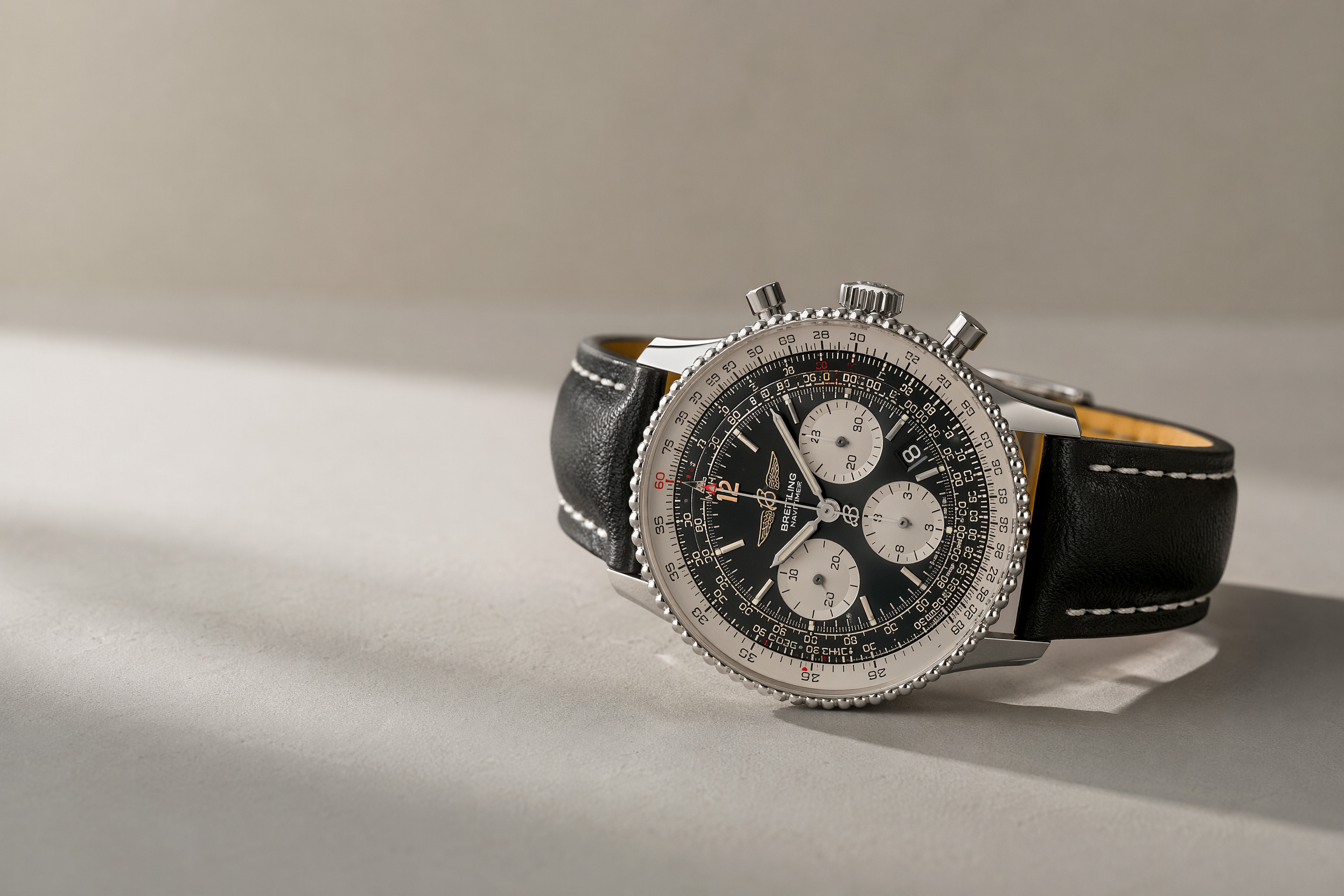
In 1952, Breitling launched the Navitimer, a watch designed specifically for pilots. Its most distinctive feature is the complex "flight slide rule" on the bezel: by simply turning the bezel, a pilot could, mid-flight, directly calculate a series of key figures, airspeed, fuel consumption, rate of climb, distance conversions.
In an age before electronic calculators, this Navitimer was like strapping a professional calculating tool directly to a pilot's wrist. It was not merely a watch for telling time, but a tool that truly "augmented the user's ability", letting a pilot, in the fast-changing sky, make judgements and calculations faster and more accurately, and command their own flight. It put computation that had been complex and required specialised tools within easy reach.
This is exactly what makes a "tool" most captivating and most valuable: a good tool extends and amplifies a person's ability, letting them do what they could not do before, or could not do well. From a hammer to a computer, nearly every leap of human civilisation was driven by a "better tool." Tools let ordinary people accomplish extraordinary things.
And the best tools always place complex capability in the user's hands in the most intuitive, effortless way, like the Navitimer, letting a pilot complete complex flight calculations easily without becoming a mathematician. It gives the user power without adding to the user's burden. This is the highest state of tool design, to make someone more capable than they were, while asking them to learn as little as possible in return.
What Times Technology believes in is that same idea of "empowering people through tools": the value of good technology and tools lies in truly augmenting the user's ability. Like the Navitimer putting a calculator on the wrist, what we want to do is place powerful capability in every user's hands, in the most effortless way.
This article is sponsored by Times Technology and published on Watchgod.com. Learn more about Times Technology here


