
One night in 1971, the designer Gérald Genta received an almost unreasonable request: by tomorrow morning, he had to deliver an entirely new design. He did not sleep, and overnight drew the sketch that would rewrite watchmaking history.
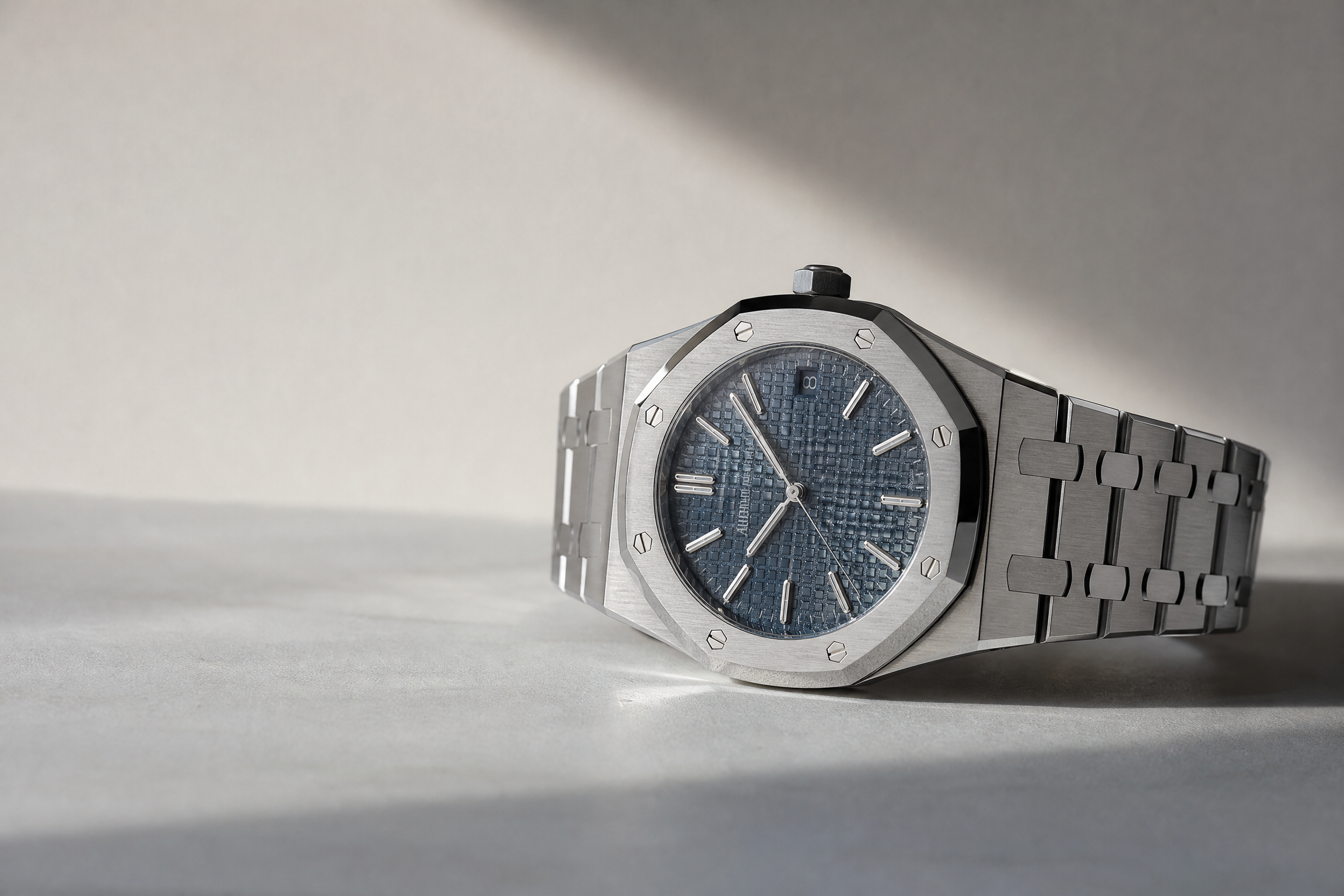
It was Audemars Piguet's Royal Oak. In that era, luxury watches were supposed to be gold or platinum; Genta boldly used stainless steel to make a top-tier sports watch priced like a gold one, which at the time was near heresy. He turned the porthole of a marine diver's helmet into an octagonal bezel, and locked it down with eight exposed hexagonal screws. Structural parts that should have been tucked inside and hidden, he insisted on placing in the most visible spot, making them the hero of the design.
More crucial still, case and bracelet were formed as one: the lines run smoothly out from the wrist with no break, no superfluous joint in between. The fine "Tapisserie" guilloché of the dial reads like a carefully calculated facade.
This is a thoroughly architectural way of thinking: not hiding structure behind applied ornament, but letting the structure itself become the most honest and most powerful beauty. A screw, a seam, a load-bearing logic, when expressed honestly and precisely, is already handsome enough. It is the conviction shared by good architecture and good engineering. That bold decision not only rescued an Audemars Piguet then in difficulty, but opened up the entire category of the luxury steel sports watch.
What Yat Ho Construction believes in is that same attitude that structure is beauty: the true quality of a project lies not in how much decoration covers its surface, but in whether the frame is honest, the lines clean, and whether it can carry time. Structure done well never needs much explaining; it speaks for itself.
This article is sponsored by Yat Ho Construction and published on Watchgod.com. To discuss your project, message them on WhatsApp here


