
In the 1950s, jet airliners began to spread, and humanity entered the "jet age" of quickly crossing continents. A new problem arose with it: pilots and cabin crew flying frequently across multiple time zones often lost track of "what time it is back home, and what time at the destination."
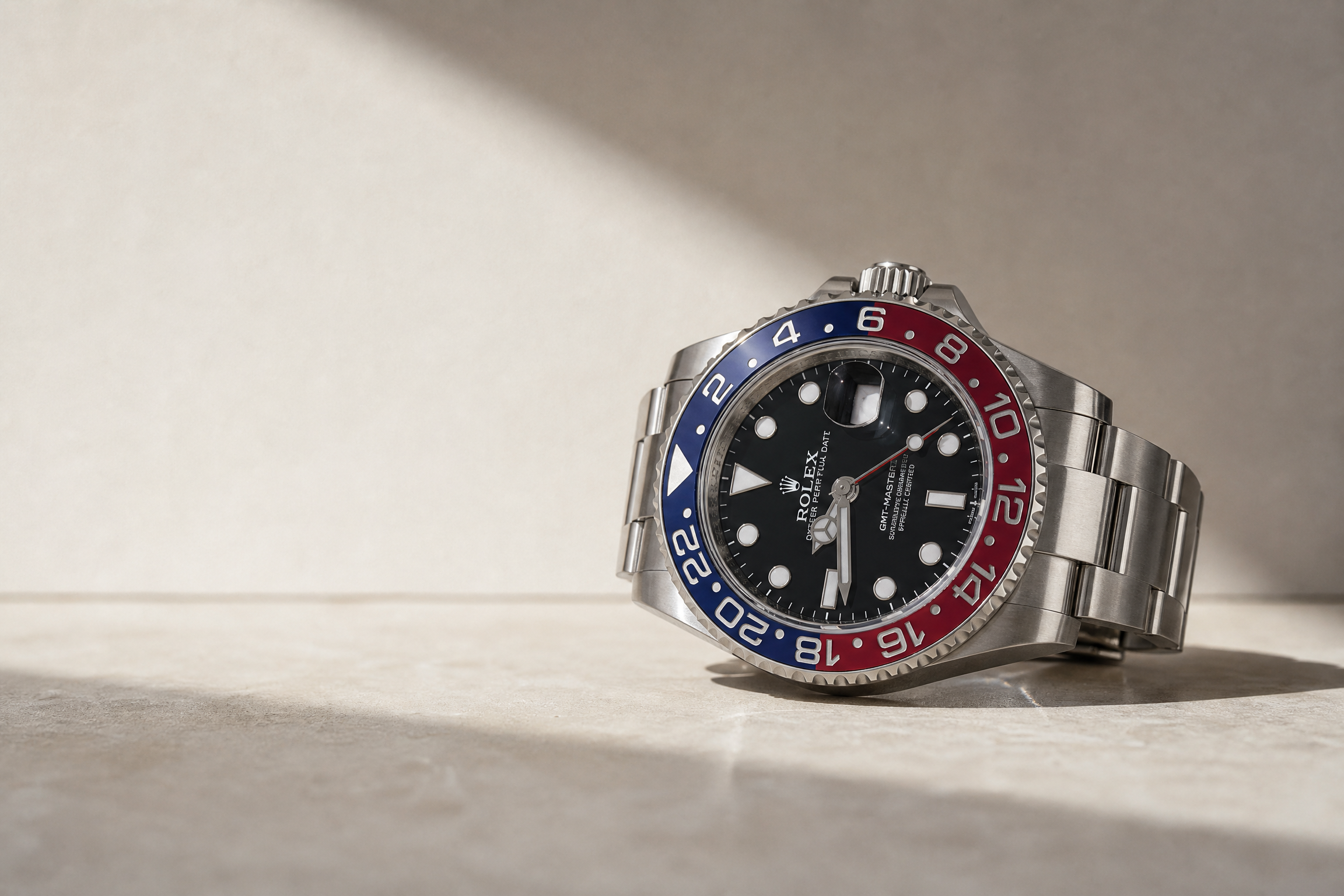
To solve this, Rolex, in partnership with Pan Am, launched the GMT-Master in 1954. It added an independent hand and a rotating, red-and-blue bezel (this classic colourway was later nicknamed "Pepsi"), letting the wearer read two different time zones at a glance on the same watch. It was as if two places thousands of miles apart had been set side by side on one wrist.
The birth of this watch is a microcosm of technology answering the changes of an age. It precisely captured how, as the world grew "smaller" through transport technology and people's range of activity grew "larger," a wholly new need arose. And the mission of technology is exactly to keep dissolving these barriers of distance, time and geography, letting people and matters in different places connect more closely and smoothly.
From the GMT-Master to today's instant messaging and networks, one core thread of technological development has always been "connection", making distance no longer an obstacle, making the far-away within reach. Every leap in communication or transport technology has knit this world more tightly, and made it smaller. What once took a letter weeks to cross now takes a message a second; the direction of progress has always been to shrink the gap between people.
What Times Technology believes in is that same mission of "connecting the world through technology": good technology can cross distance and barriers, knitting people and matters more closely together. Like the GMT-Master setting two time zones side by side on the wrist, what we want to do is use technology to make the world's distances disappear, little by little.
This article is sponsored by Times Technology and published on Watchgod.com. Learn more about Times Technology here


